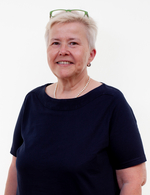
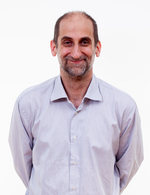
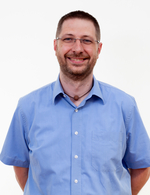
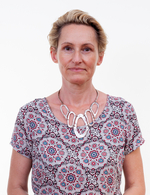
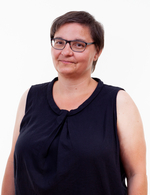
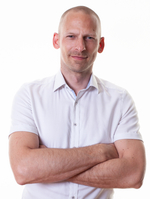
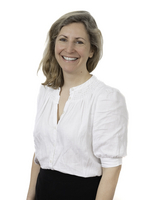
Members of the Waste Management Advisory Board The Waste Management Advisory Board comprises scientists, NGOs, representatives of the federal and state governments, and representatives of civil society.

The Waste Management Advisory Board currently consists of 14 members, including the chair. Some members were already on the Advisory Board for the 2021–2025 term and are continuing their work, whilst others are new additions. Below you will find the current and former members of the Waste Management Advisory Board.

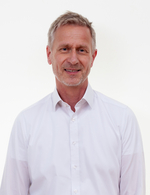
  • Chair
  • Experts and stakeholders
  • Representatives of civil society
  • Representatives of the federal states
  • Representatives of the federal ministries

Chairmanship

Professor Roland Pomberger, DI, Dr

Leoben University of Mining and Technology
  • Chair of Waste Recovery Technology and Waste Management 


Experts and stakeholders

DI Roman Beyerknecht

Nuclear Engineering Seibersdorf GmbH
  • Over 20 years’ experience in radiation protection as a government-appointed expert and in a senior management role at Nuclear Engineering Seibersdorf GmbH (NES)
  • Extensive experience in the field of radioactive waste management, from collection to interim storage, and responsibility for the safe handling of waste as Managing Director of NES
  • International networking and work as an expert in the field of radioactive waste management and the decommissioning of nuclear facilities, for example for the European Commission

“The work of the Waste Disposal Advisory Board is important because the responsibility for the safe disposal of our radioactive waste should not be left to future generations.”


Professor Ulrike Felt, PhD

University of Vienna
  • University professor and Director of the Institute for Science and Technology Studies
  • Head of the research platform ‘Responsible Research and Innovation in Academic Practice’
  • Her research focuses on participation and governance in science and technology, science communication, and changes in knowledge production


Dr Stefan Mayer

International Atomic Energy Agency (IAEA)
  • Team Leader for Radioactive Waste Management in the Department of Nuclear Energy


Mag. Dr Nikolaus Müllner

Vienna University of Natural Resources and Life Sciences
  • PhD in Physics and many years’ experience in the field of safety and risk assessment for nuclear facilities
  • Austrian representative on the Nuclear Safety Standards Committee of the IAEA (International Atomic Energy Agency) and member of the German Reactor Safety Commission’s Committee on Plant and Systems Engineering
  • Head of the Institute for Safety and Risk Sciences, with experience and expertise in safety and risk analyses within the context of licensing procedures

“Austria has opted not to use nuclear energy; nevertheless, there is radioactive waste from research, medicine, industry and, above all, from the decommissioning of Austria’s nuclear research facilities from the 1960s to the 1990s. The Waste Management Advisory Board is making a fresh attempt to improve the current, temporary solution. This work is important to spare future generations a problem for which they are not responsible – even if it will take decades before a final repository can be established.”


Dr Johannes Sterba, DI

Vienna University of Technology
  • PhD in Engineering Physics, nuclear and experimental physicist, research in archaeometry, tracer production and radiochemistry
  • Nuclear Safety and Security Officer at the TRIGA Mk II research reactor at the Vienna University of Technology
  • Collaboration with the IAEA in the fields of nuclear security and safeguards

“The work of the Waste Management Advisory Board is important because we need to find solutions today that will also work for future generations.”


Representatives of civil society

Patricia Lorenz

GLOBAL 2000/Friends of the Earth Europe
  • Over 30 years’ experience in the anti-nuclear sector
  • Involvement in EIA and other public consultation processes
  • International experience in the disposal of radioactive waste

“The Waste Management Advisory Board is important because it offers a real opportunity for Austria to establish an exemplary process for the disposal of its own radioactive waste!”


Mag. Gabriele Mraz, MA

Austrian Institute of Ecology
  • Topics covered in university degrees: Radioecology in Arctic food chains and the links between sustainability and gender
  • Key areas of work include transparency and public participation in the nuclear sector and the disposal of nuclear waste.
  • Work within NGO networks, (large-scale) research projects and consultancy activities.

“The public must be able to participate effectively in every stage of radioactive waste disposal, both now and for future generations.”


Representatives of the federal states

Mag. Bernhard Haubenberger

Austrian Association of Local Authorities
  • Legal Adviser
  • Specialist Advisor on Legal and International Affairs


Mag. Daniel Mörtinger

Office of the Lower Austrian Provincial Government
  • Department of Environmental and Plant Legislation


Representatives of the federal ministries

Mag. Eva Festl

Federal Ministry of Finance
  • Representative of the Budget Section
  • Responsible for budgetary aspects of radiation protection

“Transparency, safety and cost-effectiveness are key to the work of the Waste Management Advisory Board.”


Benedikt Hämmerle, BSc, BSc (WU), MSc

Federal Ministry of Labour, Social Affairs, Health, Care and Consumer Protection
  • Head of Department VII/2, Radiation Protection


Dr Anna Muner-Bretter

Federal Chancellery
  • Deputy Head of Department IV/4 – Environment, Climate, Transport, Sustainability and Agenda 2030 at the Federal Chancellery
  • A lawyer specialising in EU environmental law with many years’ experience in EU coordination

“For the sake of future generations, we need a solution for radioactive waste that is based on broad public acceptance.”


DI Christina Raith

Federal Ministry of Agriculture and Forestry, Climate and Environmental Protection, Regions and Water Management
  • Head of Department V/8: Radiation Protection


Members for the 2021–2025 term

  • Mag. Silvia Benda-Kahri, Federal Environment Agency GmbH
  • DI Dipl.-Päd. Sabine Kranzl, Federal Environment Agency GmbH
  • Roman Beyerknecht, MEng, Nuclear Engineering Seibersdorf GmbH
  • Professor Ulrike Felt, University of Vienna, Institute for Science and Technology Studies
  • Professor Frank Melcher, Leoben University of Mining and Technology, Chair of Geology and Mineral Deposits
  • Mag. Dr Nikolaus Müllner, University of Natural Resources and Life Sciences, Vienna, Institute for Safety and Risk Sciences
  • Univ. Prof. Dipl.-Phys. Wolfgang Renneberg, University of Natural Resources and Life Sciences, Vienna, Institute for Safety and Risk Sciences
  • Dipl.-Biol. t.o. Angelika Spieth-Achtnich, Öko-Institut Consult GmbH
  • DI Dr Johannes Sterba, Vienna University of Technology, Institute of Nuclear Engineering
  • Univ.-Prof. (em) Dr Hannelore Weck-Hannemann, University of Innsbruck, Institute of Public Finance
  • Patricia Lorenz, GLOBAL 2000/Friends of the Earth Europe
  • Mag. Gabriele Mraz, MA, Austrian Ecology Institute
  • Mag. David Reinberger, Austrian Environmental and Nature Conservation Ombudsman’s Office
  • Mag. Bernhard Haubenberger, Austrian Association of Local Authorities
  • Dr Ewald Plantosar, Office of the Styrian Provincial Government
  • Wolfgang Piermayr, MA, Office of the Upper Austrian Provincial Government
  • DI Gerhard Seifritz, Office of the Lower Austrian Provincial Government
  • Dr Sigrid Sperker, Office of the Upper Austrian Provincial Government (until 2024)
  • Mag. Christoph Urbanek, Office of the Lower Austrian Provincial Government (until 2022)
  • Rene Albert, BSc, MA, Federal Ministry for Innovation, Mobility and Infrastructure (alternate member)
  • Philipp Bohatschek, BA MSc (WU), Federal Ministry of Finance (until 2023)
  • Mag. Manfred Ditto, Federal Ministry of Labour, Social Affairs, Health, Care and Consumer Protection
  • Mag. Eva Festl, Federal Ministry of Finance
  • Dr Isabel Lamprecht-Pühra, Federal Ministry of Finance (until 2021)
  • Dipl. Ing. Günter Liebel, Federal Ministry of Agriculture, Forestry, Regions and Water Management (until 2023)
  • Benedikt Montag, MSc, Federal Chancellery
  • Monika Mörth, MAS, Federal Ministry of Agriculture and Forestry, Climate and Environmental Protection, Regions and Water Management
  • Dr Anna Muner-Bretter, Federal Chancellery
  • Horst Reicher, Federal Ministry for Climate Protection, the Environment, Energy, Mobility, Innovation and Technology (until 2024)
  • Mag. Ursula Rosenbichler, Federal Ministry of Art, Culture, the Civil Service and Sport (until 2024)
  • DI Volker Schaffler, MA, Federal Ministry for Innovation, Mobility and Infrastructure
  • Mag. Sabine Schneeberger, Federal Chancellery (until 2024)
  • Dr Erik Tajalli, Federal Chancellery (alternate member)
  • Mag. Charlotte Vogl, Federal Ministry of Agriculture and Forestry, Climate and Environmental Protection, Regions and Water Management (alternate member)